
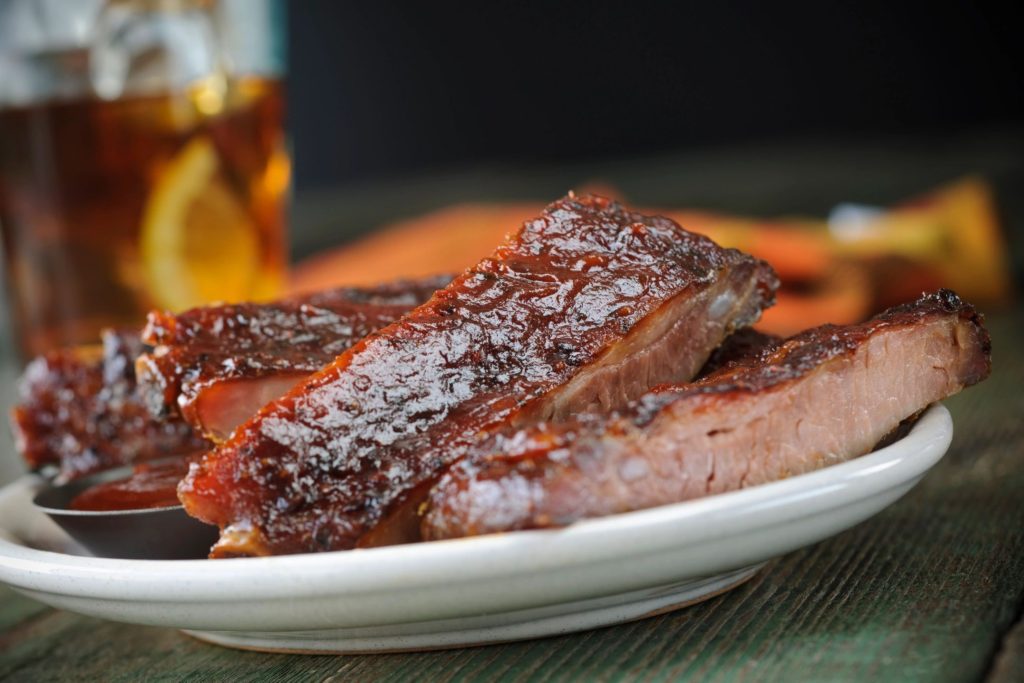
Pork Ribs
Pork ribs come in two main types: Baby Back and Spareribs.
Baby Back Ribs
Cut from the upper part of the pig's rib cage, Baby Backs are shorter, curved, and smaller in length — with a shorter cook time. They have a milder flavor profile, making them more tender and perfect for soaking up BBQ sauce. They're also the most common cut found at grocery stores.
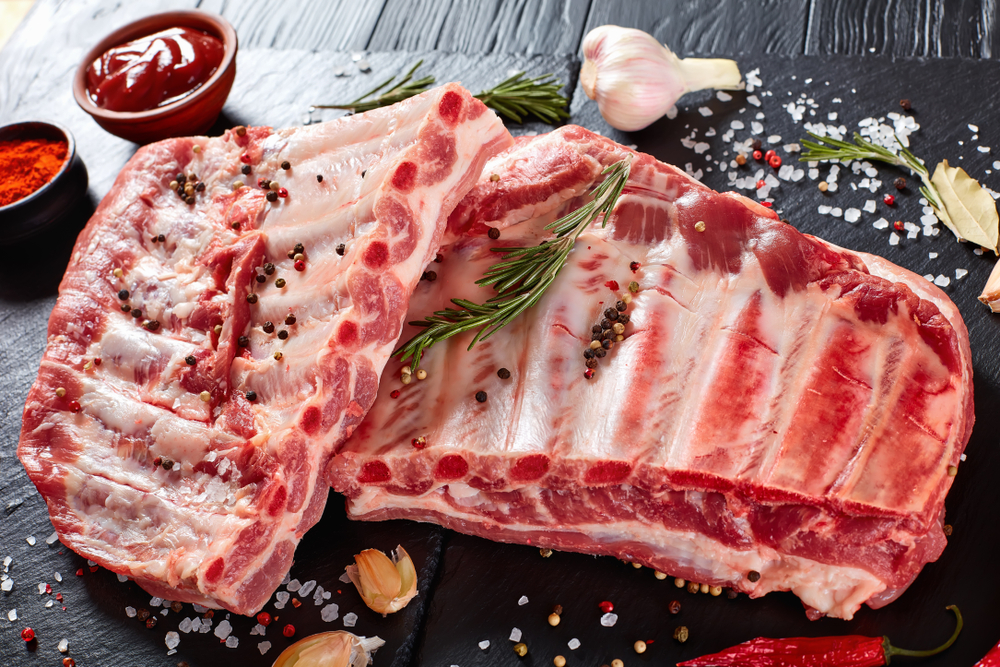
Pork Spareribs
Larger, meatier, and fattier than Baby Backs — giving them a richer flavor. They have more connective tissue, making them ideal for slow smoking. Cut from the lower part of the pig's rib cage, Spareribs result in longer, flat ribs. Popular with BBQ competition teams, they're also used to make rib tips and are a more economical option than beef ribs.
Beef Ribs
Beef ribs offer a rich, beefy flavor and are known for their substantial size and meatiness, though they may require a longer cooking time to become tender. There are primarily two types.
Beef Plate Ribs
Known for their thick layer of meat and rich marbling, Plate Ribs are often called "dino ribs" due to their large size. Cut from the beef plate below the ribeye, these are the showstopper cut for serious pitmasters.
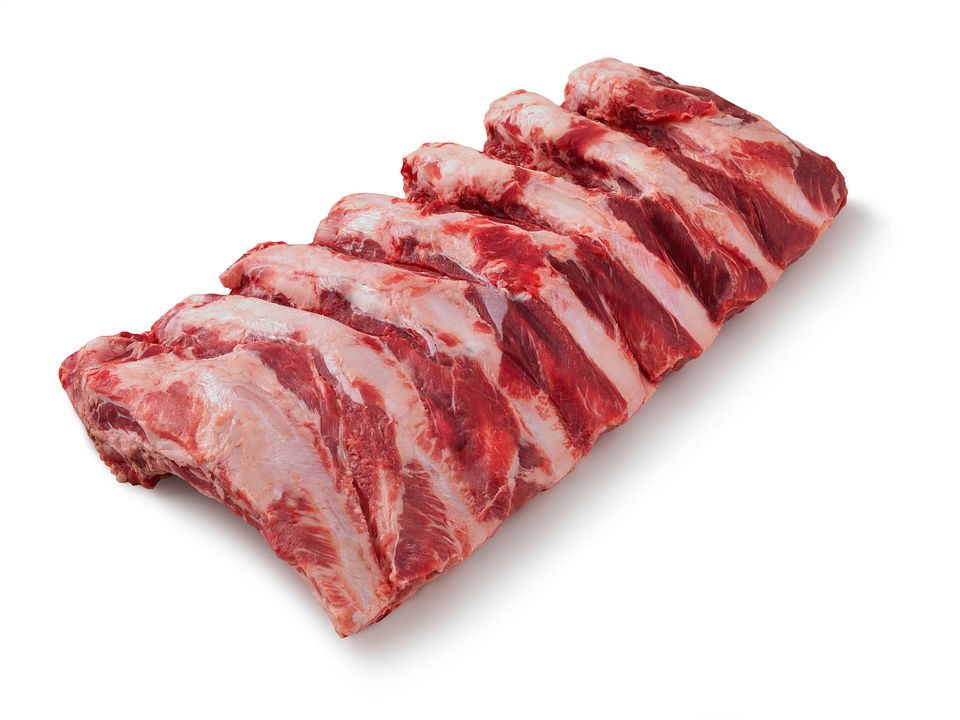
Beef Back Ribs
Cut from the rib section closer to the spine, Beef Back Ribs have less meat than plate ribs since much of the beef remains with the ribeye roast. However, they still deliver great flavor and can be significantly less expensive.
This technique works especially well for spareribs. Smoke the ribs uncovered for 3 hours, then wrap them in foil for 2 hours, and finally unwrap them for the last hour — adding Curley's sauce in that final stretch for maximum glaze. For baby back ribs, reduce the first phase to two hours.
Quick Tips for Smoking
Now that you know the cuts, it's time to get smoking.
- 1Start with a dry rub or marinade for flavor.
- 2Smoke at around 225°F (107°C) for 4–6 hours, depending on rib size.
- 3Maintain a steady temperature and smoker conditions throughout.
- 4Add BBQ sauce about one hour from the end.
- 5Use the "bend test" to check for doneness — ribs should bend without breaking.
- 6Use a meat thermometer and target an internal temperature of 190–195°F for best quality.
Top It Off
Curley's Famous Hickory Barbecue Sauce
Curley's Famous Hickory Barbecue Sauce pairs perfectly with both beef and pork ribs. Sweet and tangy with apple cider vinegar, natural sugar, celery seed, sweet spices, and just a hint of hickory smoke. All-natural, kosher, gluten-free, and no high-fructose corn syrup.
Whether it's beef or pork, the backyard or a tailgate — you can't miss with ribs smoked to perfection.